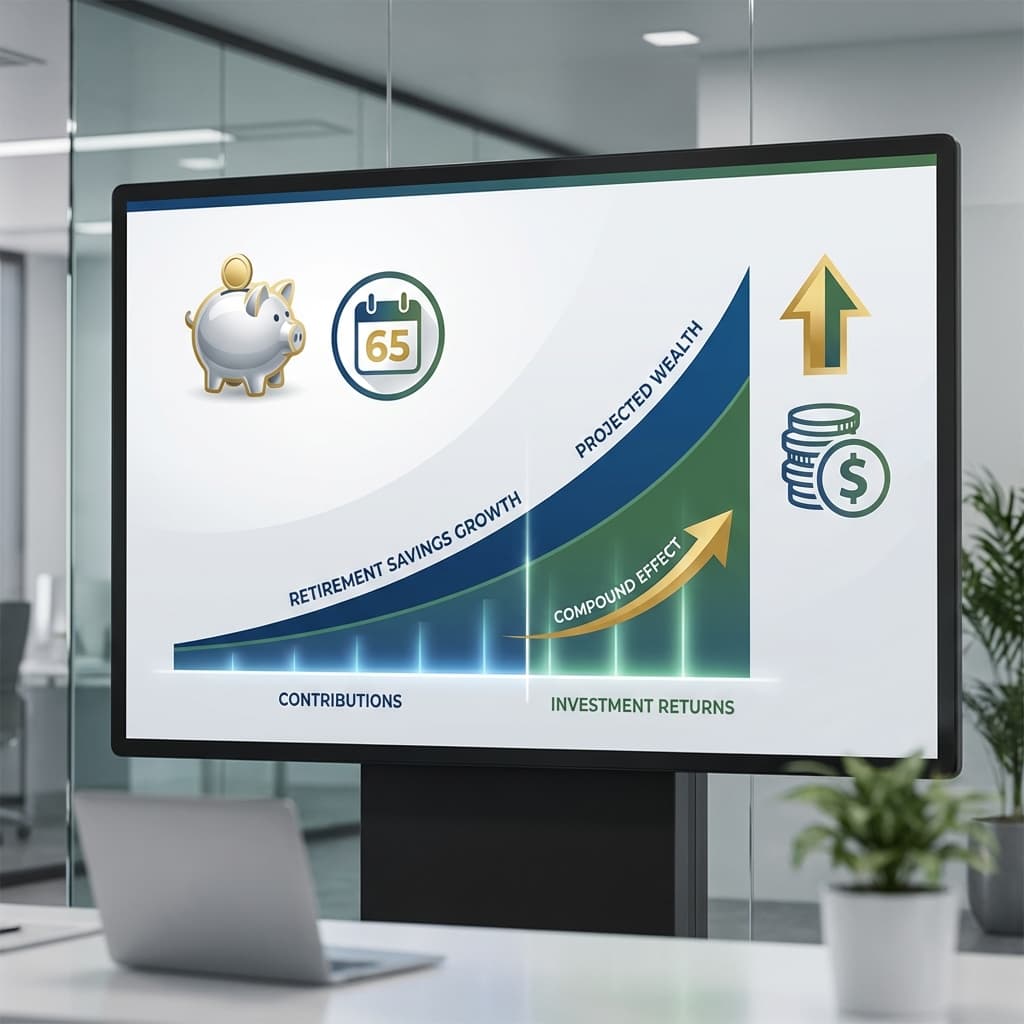
Retirement planning isn't your parents' game anymore. You're facing longer lifespans, multiple career changes, student debt, and an uncertain Social Security future. But that doesn't mean retirement is impossible—it just requires a different strategy.
Why Traditional Retirement Advice Doesn't Work
The old playbook assumed:
- One career for 40 years
- A pension waiting at the end
- Social Security covering most expenses
- Retiring at 65 and living to 80
Your Reality:
- 5-7 career changes expected
- Pensions are nearly extinct
- Social Security may be reduced
- You'll likely live to 90+
- You might want to retire earlier (or never fully retire)
This isn't doom and gloom—it's an opportunity to design retirement on your terms.
The New Retirement Math
Forget the "save 10% and hope for the best" advice. Here's what you actually need.
The 25x Rule
Formula: Annual Retirement Expenses × 25 = Retirement Savings Needed
Example:
- Want to spend $60,000/year in retirement
- Need: $60,000 × 25 = $1,500,000
This assumes the "4% rule"—withdrawing 4% annually from your nest egg without running out of money.
Adjusting for Your Timeline
| Starting Age | Years to Save | Monthly Savings Needed | Total at 65 |
|---|---|---|---|
| 25 | 40 years | ~$500/month | $1,500,000 |
| 35 | 30 years | ~$1,000/month | $1,500,000 |
| 45 | 20 years | ~$2,000/month | $1,500,000 |
The Lesson: Start now. Every year you wait dramatically increases the required monthly savings.
Where to Actually Put Your Money
Retirement accounts aren't one-size-fits-all. Here's how to choose.
401(k): The Foundation
How It Works:
- Employer-sponsored retirement plan
- Contributions reduce your taxable income today
- Money grows tax-free
- Pay taxes when you withdraw in retirement
2026 Contribution Limits:
- Under 50: $23,000/year
- 50+: $30,500/year (with catch-up)
The Strategy:
- Contribute enough to get full employer match (free money!)
- Increase by 1% annually until you hit the max
- Choose low-cost index funds
- Never touch it before retirement
Salary: $60,000
Employer matches 50% up to 6% of salary
You contribute: $3,600 (6%)
Employer adds: $1,800 (3%)
Instant 50% return on your money
Roth IRA: Tax-Free Growth
How It Works:
- You contribute after-tax dollars
- Money grows tax-free
- Withdrawals in retirement are 100% tax-free
2026 Contribution Limits:
- $7,000/year ($8,000 if 50+)
- Income limits apply (phase-out starts at $146,000 single, $230,000 married)
Why It's Powerful:
- Tax-free growth for decades
- No required minimum distributions
- Can withdraw contributions anytime (not earnings)
- Hedge against future tax increases
The Strategy:
- Max out 401(k) match first
- Then max out Roth IRA
- Then return to 401(k) to max it out
Traditional IRA: The Backup Plan
When to Use:
- You exceed Roth IRA income limits
- You want a tax deduction now
- You expect lower taxes in retirement
2026 Contribution Limits:
- Same as Roth: $7,000/year ($8,000 if 50+)
HSA: The Secret Retirement Weapon
Health Savings Account Benefits:
- Triple tax advantage (deductible, grows tax-free, withdraws tax-free for medical)
- After 65, can withdraw for anything (taxed like traditional IRA)
- No "use it or lose it" rule
- Rolls over year after year
2026 Contribution Limits:
- Individual: $4,300
- Family: $8,550
The Strategy:
Pay medical expenses out-of-pocket now, let HSA grow for retirement healthcare costs.
Investment Strategy for Long-Term Growth
You have decades until retirement. Use that to your advantage.
The Age-Based Allocation
Simple Formula:
Stock Allocation = 110 - Your Age
Examples:
- Age 25: 85% stocks, 15% bonds
- Age 35: 75% stocks, 25% bonds
- Age 45: 65% stocks, 35% bonds
Why It Works:
- Young: More time to recover from market drops
- Older: Less time, need more stability
The Three-Fund Portfolio
Simple, Effective, Low-Cost:
- Total US Stock Market Index (60-70%)
- Total International Stock Index (20-30%)
- Total Bond Market Index (10-20%)
Example Allocation at Age 30:
- 60% US stocks (VTI or similar)
- 25% International stocks (VXUS or similar)
- 15% Bonds (BND or similar)
Annual Maintenance:
- Rebalance once per year
- Adjust bond allocation as you age
- Keep expense ratios under 0.20%
Target-Date Funds: The Autopilot Option
How They Work:
- Pick a fund with your target retirement year
- Fund automatically adjusts allocation as you age
- Starts aggressive, becomes conservative over time
Example:
- Target Retirement 2060 Fund (for someone retiring around 2060)
- Currently: ~90% stocks
- Automatically shifts to ~40% stocks by 2060
Pros:
- Set it and forget it
- Automatic rebalancing
- Professional management
Cons:
- Slightly higher fees than DIY
- Less control over allocation
Dealing with Competing Financial Goals
You're not just saving for retirement. You have student loans, want to buy a house, maybe start a family. How do you balance it all?
The Priority Waterfall
1. Emergency Fund First
- Build $1,000 starter fund
- Then 3-6 months of expenses
- This prevents retirement raid during emergencies
2. Employer 401(k) Match
- Always get the full match
- It's a guaranteed 50-100% return
- Never leave free money on the table
3. High-Interest Debt
- Credit cards over 15% APR
- Payday loans
- Any debt over 10% interest
4. Roth IRA
- Max it out if possible
- At minimum, contribute something
5. Additional 401(k) Contributions
- Work toward maxing it out
- Increase 1% per year
6. Other Goals
- House down payment
- Kids' college
- Additional investments
The Debt vs. Retirement Debate
Pay Off Debt First If:
- Interest rate over 7%
- It's causing you stress
- You have no employer match
Invest While Paying Debt If:
- Interest rate under 5%
- You have employer match available
- Debt is manageable
The Balanced Approach:
- Get employer match
- Pay minimums on low-interest debt
- Attack high-interest debt aggressively
- Increase retirement contributions as debt disappears
The Side Hustle Retirement Boost
Extra income can supercharge your retirement savings.
Strategy:
- Dedicate 50% of side hustle income to retirement
- Use the other 50% for current goals
- Even $500/month extra makes a massive difference
Extra $500/month from side income
30 years at 7% return
Result: $566,000
Over half a million from side income alone!
Side Hustle Ideas for 2026:
- Freelance your professional skills
- Online tutoring or coaching
- Content creation
- E-commerce or dropshipping
- Consulting in your expertise area
Planning for Multiple Retirement Scenarios
Don't put all your eggs in one retirement basket.
Scenario 1: Traditional Retirement (Age 65)
The Plan:
- Max out tax-advantaged accounts
- Follow the 25x rule
- Plan for 30+ years of retirement
Scenario 2: Early Retirement (Age 50-55)
The Plan:
- Need more savings (longer retirement)
- Build taxable investment accounts (access before 59.5)
- Consider Roth conversion ladder
- Plan for healthcare before Medicare
Scenario 3: Semi-Retirement (Phased Approach)
The Plan:
- Reduce work hours gradually
- Maintain some income indefinitely
- Need less total savings
- More flexibility and life balance
Scenario 4: Never Fully Retire
The Plan:
- Work on your terms doing what you love
- Savings provide security, not total income
- Ultimate flexibility
- Keep mind sharp and engaged
Avoiding Common Mistakes
MISTAKE #1: Waiting to Start
Impact: Costs you hundreds of thousands in compound growth
Fix: Start with $50/month if that's all you can manage
MISTAKE #2: Cashing Out 401(k) When Changing Jobs
Impact: Taxes, penalties, and lost growth
Fix: Roll it over to new 401(k) or IRA
MISTAKE #3: Being Too Conservative Too Young
Impact: Missing out on growth when you can afford risk
Fix: Age-appropriate allocation (heavy stocks when young)
MISTAKE #4: Paying High Fees
Impact: 1% in fees can cost you $100,000+ over 30 years
Fix: Choose index funds with expense ratios under 0.20%
MISTAKE #5: Ignoring Inflation
Impact: Your savings lose purchasing power
Fix: Plan for 3% annual inflation in retirement
Your Action Plan
Ready to start building your retirement? Here's your roadmap:
- Calculate your retirement number - Use the 25x rule
- Sign up for 401(k) - At least enough for full match
- Open a Roth IRA - Vanguard, Fidelity, or Schwab
- Choose investments - Target-date fund or three-fund portfolio
- Automate contributions - Set it and forget it
- Increase annually - 1% raise = 1% more to retirement
- Track progress - Review quarterly, adjust as needed
The Bottom Line
Retirement planning in 2026 requires a different approach than your parents used. But with the right strategy, you can build a secure financial future while still living your life today.
The key is starting now, staying consistent, and letting compound interest work its magic over decades.
You don't need to be perfect. You just need to be persistent.
Need to free up cash for retirement contributions? Use our Loan Payoff Calculator to see how eliminating debt can redirect money to your future.