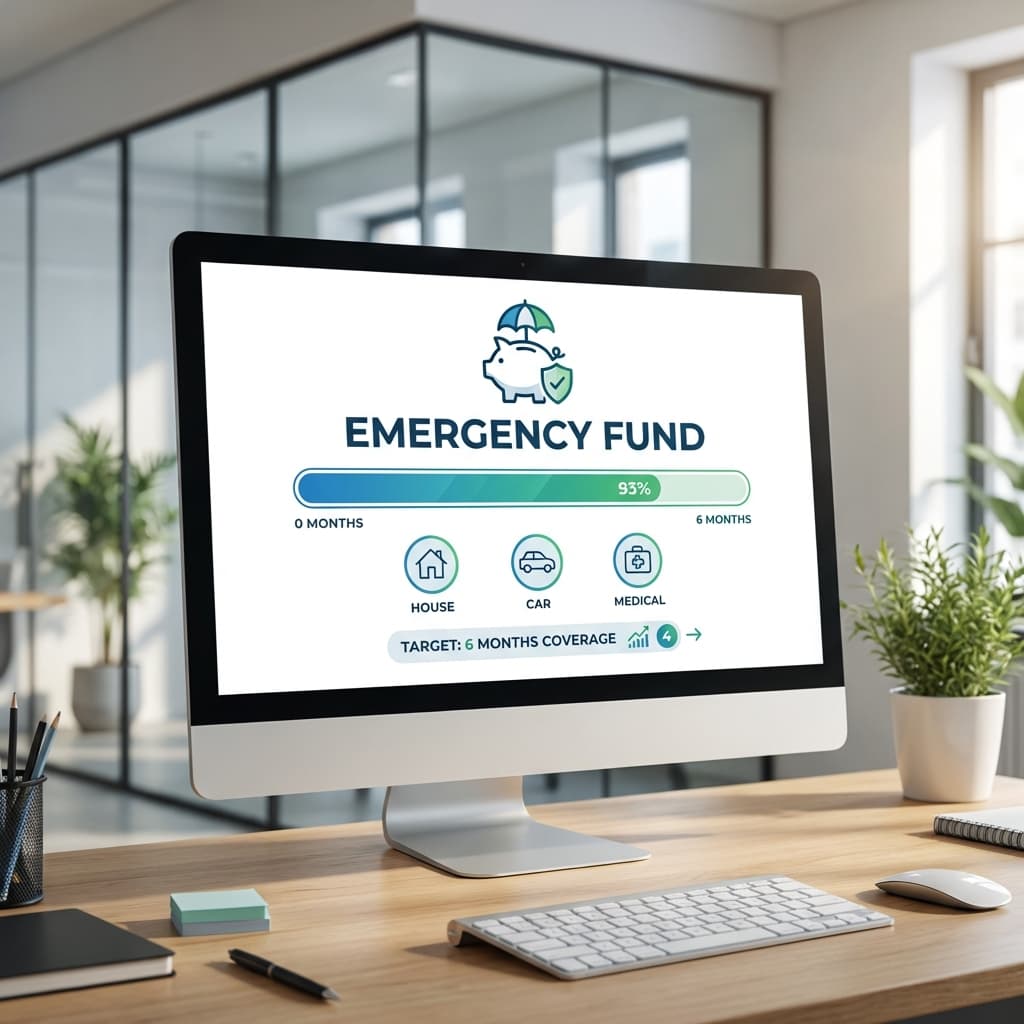
Life doesn't send a warning before it sends a bill. Your car breaks down. Your water heater dies. You lose your job. An emergency fund is the financial cushion that keeps these events from becoming disasters.
Why Emergency Funds Matter More Than Ever
In 2026, economic uncertainty is the new normal. Job markets shift rapidly. Inflation remains elevated. Having cash reserves isn't just smart—it's essential for financial survival.
What an Emergency Fund Protects You From:
- Job loss or reduced income
- Medical emergencies and unexpected health costs
- Major home or car repairs
- Family emergencies requiring travel
- Unexpected tax bills
- Essential appliance replacements
Without an emergency fund, you're forced into bad decisions: high-interest credit cards, payday loans, or raiding retirement accounts. Each of these options makes your situation worse, not better.
How Much Do You Really Need?
The standard advice is 3-6 months of expenses. But that's too vague. Your ideal emergency fund depends on your specific situation.
Calculate Your Target Amount
Step 1: List Your Essential Monthly Expenses
- Housing (rent/mortgage, utilities, insurance)
- Food and groceries
- Transportation (car payment, gas, insurance)
- Minimum debt payments
- Health insurance and medications
- Phone and internet
| Risk Level | Months Needed | Best For |
|---|---|---|
| 3 months | Low risk | Dual income household, stable jobs, good health insurance |
| 6 months | Medium risk | Single income, self-employed, or industry volatility |
| 9-12 months | High risk | Self-employed with variable income, health concerns, high-risk industry |
Essential monthly expenses: $3,500
Risk factor: 6 months (single income household)
Target emergency fund: $21,000
The Baby Steps Approach
Don't let a big target paralyze you. Build your fund in stages.
Stage 1: The Starter Fund ($1,000)
Your first goal is $1,000. This covers most minor emergencies without derailing your budget.
How to Get There Fast:
- Sell items you don't use
- Take on a temporary side gig
- Redirect one month of "fun money"
- Use your tax refund
- Skip dining out for a month
Timeline: 1-3 months for most people
Stage 2: The One-Month Fund
Once you have $1,000, build to one month of expenses. This is your safety net against most common emergencies.
Strategy:
- Automate $100-200 per paycheck
- Apply windfalls (bonuses, gifts, rebates)
- Reduce one major expense temporarily
Timeline: 3-6 months
Stage 3: The Full Fund (3-6 Months)
Now you're building serious financial security. This takes time, but it's worth every dollar.
Sustainable Approach:
- Treat it like a bill—pay yourself first
- Increase contributions when you get raises
- Celebrate milestones (every $5,000 saved)
- Don't stop until you hit your target
Timeline: 1-3 years for most people
Where to Keep Your Emergency Fund
Your emergency fund needs to be safe and accessible. This isn't money for investing—it's insurance.
Best Options for Emergency Funds
High-Yield Savings Accounts
- Pros: FDIC insured, easy access, earning 4%+ in early 2026
- Cons: Rates can drop over time
- Best for: Most people
Money Market Accounts
- Pros: Higher interest than regular savings, check-writing ability
- Cons: May require higher minimums
- Best for: Larger emergency funds ($25,000+)
Short-Term CDs (Laddered)
- Pros: Slightly higher rates, forced discipline
- Cons: Early withdrawal penalties
- Best for: People who might dip into savings impulsively
Where NOT to Keep Emergency Funds
AVOID:
- Checking accounts (too easy to spend, low interest)
- Stock market (too volatile for emergency money)
- Cryptocurrency (extreme volatility)
- Under your mattress (no interest, theft risk)
- Retirement accounts (penalties and taxes)
The Psychology of Saving
Building an emergency fund is as much mental as it is mathematical. Here's how to stay motivated:
Make It Automatic
Set up automatic transfers the day after payday. You can't spend what you don't see.
Automation Strategy:
- Transfer 10-15% of each paycheck immediately
- Round up purchases and save the difference
- Direct deposit a portion straight to savings
Separate the Account
Keep your emergency fund in a different bank than your checking account. The extra friction prevents impulsive withdrawals.
Pro Tip: Choose an online bank with no physical branches. The 2-3 day transfer time gives you pause before making emotional decisions.
Track Your Progress Visually
Watching your balance grow is motivating. Use apps, spreadsheets, or even a paper chart on your fridge.
Milestone Celebrations:
- $1,000: Treat yourself to a nice (inexpensive) meal
- $5,000: Take a day trip
- $10,000: Buy something small you've wanted
- Full fund: Celebrate big (but don't deplete the fund!)
When to Use Your Emergency Fund
This is critical: emergency funds are for emergencies, not inconveniences.
True Emergencies
USE YOUR FUND FOR:
- Job loss or income reduction
- Medical emergencies not covered by insurance
- Essential home repairs (roof leak, broken furnace)
- Car repairs needed for work
- Emergency travel for family crisis
Not Emergencies
DON'T USE YOUR FUND FOR:
- Vacations (save separately)
- Holiday gifts
- New phone or laptop (unless work-essential)
- Sale items or "deals"
- Routine car maintenance
- Predictable annual expenses
The Rule: If you saw it coming, it's not an emergency.
Replenishing After Use
Used your emergency fund? Don't panic. Rebuild it systematically.
Rebuild Strategy:
- Pause other financial goals temporarily - stop extra debt payments or investing
- Redirect all available cash - bonuses, tax refunds, side income
- Cut discretionary spending - temporarily reduce fun money
- Set a deadline - aim to rebuild within 3-6 months
- Resume normal goals - once fund is restored
Common Mistakes to Avoid
MISTAKE #1: Waiting to Start
FIX Start with $25 per paycheck if that's all you can manage
MISTAKE #2: Keeping It Too Accessible
FIX Separate bank, no debit card attached
MISTAKE #3: Stopping at $1,000
FIX Keep building until you hit your full target
MISTAKE #4: Using It for Non-Emergencies
FIX Create sinking funds for predictable expenses
MISTAKE #5: Investing Emergency Money
FIX Keep it in cash equivalents only
Advanced Strategies
Once you have your basic emergency fund, consider these optimizations:
The Two-Tier System
- Tier 1: $5,000 in instant-access savings (true emergencies)
- Tier 2: Remaining funds in higher-yield accounts with 2-3 day access
This maximizes interest while maintaining liquidity.
The Income Replacement Focus
Instead of months of expenses, some people prefer 6-12 months of income replacement. This works well if you have:
- High variable expenses
- Irregular income
- Dependents relying on you
The Opportunity Fund
Once your emergency fund is complete, build an "opportunity fund" for:
- Career transitions
- Business opportunities
- Calculated risks
- Major life changes
This lets you take advantage of opportunities without touching your safety net.
Your Action Plan
Ready to build your emergency fund? Here's your roadmap:
- Calculate your target - Use the formula above
- Open a high-yield savings account - Separate from your main bank
- Set up automatic transfers - Start with 10% of income
- Build to $1,000 first - Your starter emergency fund
- Continue to one month - Then three months, then six
- Protect it fiercely - Only use for true emergencies
The Bottom Line
An emergency fund isn't sexy. It won't make you rich. But it will keep you from becoming poor when life happens.
The peace of mind from knowing you can handle unexpected expenses is priceless. No more panic when the check engine light comes on. No more stress about job security. Just calm, confident financial stability.
Start today. Even $25 is progress. Your future self will thank you.
Need to free up cash for your emergency fund? Use our Loan Payoff Calculator to see how paying off debt faster can redirect money to savings.