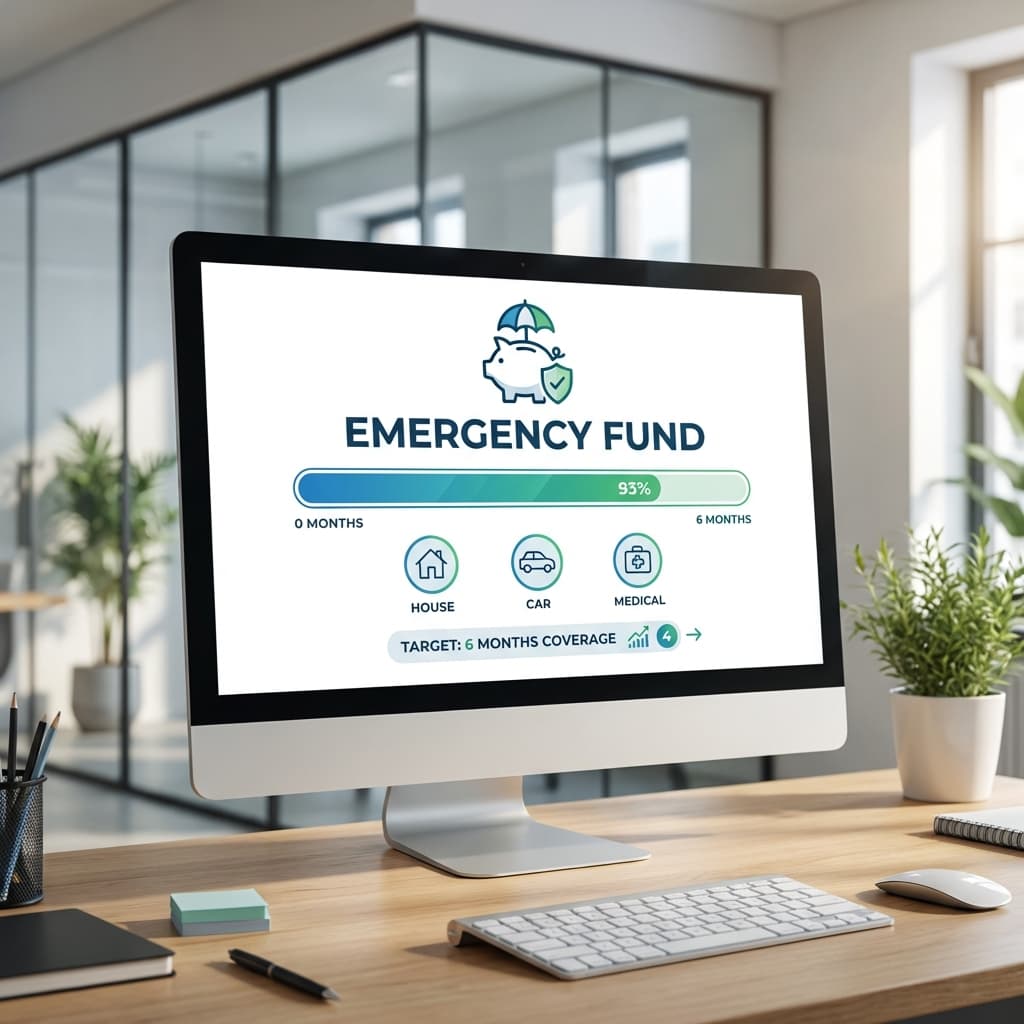
An emergency fund is your financial safety net—the buffer between you and life's unexpected expenses. But how much should you save? An emergency fund calculator helps you determine the right amount for your situation.
Why You Need an Emergency Fund
Without a proper safety net, unexpected expenses often force you to rely on high-interest credit cards, expensive personal loans, or even raid your retirement accounts—triggering taxes and penalties. This creates a cycle of debt and constant stress over every financial hiccup.
On the flip side, a fully funded emergency fund gives you the power to handle job loss, medical emergencies, major home repairs, or emergency travel without derailing your long-term financial goals.
The 3-6 Month Rule (And Why It's Just a Starting Point)
When 3 Months Is Enough
Three months of expenses is typically sufficient if you have a high level of stability. This applies to dual-income households in stable industries with high demand, or those with significant home equity and no dependents. If you have excellent job security and disability insurance, a smaller fund allows you to invest more aggressively elsewhere.
Sarah has a stable tech job, a working partner, and no kids. With monthly expenses of $3,500, her 3-month goal is $10,500.
When You Need 6+ Months
You should aim for 6-12 months of coverage if your income is less predictable or others rely on you. This includes sole income earners, freelancers, self-employed individuals, or those in volatile industries. If you have dependents or chronic health conditions, a larger cushion provides necessary peace of mind.
As a self-employed homeowner with two kids, Mike's income varies. With $5,000 in monthly expenses, his conservative 10-month goal is $50,000.
Calculating Your Monthly Expenses
To calculate your target, focus only on essential survival expenses, not your current lifestyle cost.
| Essential (Include) | Non-Essential (Exclude) |
|---|---|
| Housing (Rent/Mortgage, Tax, Ins) | Dining Out & Entertainment |
| Utilities (Electric, Water, Internet) | Subscriptions (Netflix, Spotify) |
| Basic Food & Groceries | Gym Memberships |
| Transportation (Car, Gas, Ins) | Travel & Hobbies |
| Insurance (Health, Life) | Clothing (Beyond Basics) |
| Minimum Debt Payments | Donations |
In a true emergency, you cut discretionary spending to make your savings last longer.
Example Scenarios
Single Professional
With monthly essentials totaling $2,500 (Rent $1,200, Food $400, Transport $300, etc.), the targets would be:
- 3 Months: $7,500
- 6 Months: $15,000
Family of Four
With higher fixed costs totaling $5,800 (Mortgage $2,000, Childcare $1,200, Food $800, etc.), the safety net needs to be substantial:
- 6 Months: $34,800
- 12 Months: $69,600
How to Build Your Fund
- Start with $1,000: Before attacking debt or investing, save $1,000. This small buffer prevents you from using credit cards for minor car repairs or unexpected bills.
- Set a Monthly Goal: Calculate the gap between your current savings and your target. Divide that by your timeline. For example, to save $14,000 in 18 months, you need to save $778/month.
- Automate It: The most effective strategy is to treat savings like a bill. Set up an automatic transfer on payday so the money moves before you can spend it.
- Find Extra Money: Accelerate your progress by reducing non-essential expenses or fixing your income through side hustles, freelancing, or selling unused items.
- Apply Windfalls: Use tax refunds, bonuses, or cash gifts to make lump-sum contributions.
Where to Keep It
Your emergency fund needs to be accessible but not too accessible. The best home is a High-Yield Savings Account (HYSA).
These accounts are FDIC insured and offer easy access without penalties, but they are separate from your checking account to reduce temptation. Importantly, they earn competitive interest (currently 4-5% APY), helping your money keep up with inflation.
Avoid keeping these funds in:
- Checking Accounts: Too easy to spend; earns no interest.
- Stocks: Too volatile; market could crash when you need cash.
- CDs: Locked up; penalties for early withdrawal.
When to Use It
Use your fund only for urgent, unexpected necessity.
| ✅ Legitimate Emergencies | ❌ Not Emergencies |
|---|---|
| Job Loss / Income Reduction | Planned Vacations |
| Urgent Medical Bills | Holiday Gifts |
| Essential Car/Home Repairs | New Electronics |
| Emergency Family Travel | Home Renovations |
The Golden Rule: If you can plan for it, save for it separately. It's not an emergency.
Calculate Your Target
Use our Emergency Fund Calculator to input your specific numbers, visualize your timeline, and create a personalized savings plan.
Calculate your emergency fund target with our Emergency Fund Calculator